CUSTOM DEVELOPMENT & RFQ
Custom Beads & Charms: An OEM/ODM Sourcing Checklist
A useful custom-product inquiry describes what must stay the same, what may change and how the finished component will be used. That makes quotations and sample approvals easier to compare.
Quick answer: For a custom bead or charm quotation, send the design or starting SKU, material, dimensioned shape, bore or attachment details, color references, quantity per variant, packing brief and destination. Separate stock selection, product customization and branded packaging because each can have different feasibility, costs and MOQ.
Choose the scope before asking for an OEM/ODM price
Suppliers may use OEM and ODM differently. Instead of relying on the label alone, describe the work in plain language and confirm which party is responsible for design, tooling, artwork, production and approvals.
| Project route | What to send | What to confirm |
|---|---|---|
| Existing catalog product | SKU, quantity and selected color or assortment | Availability, packing unit and current stock terms |
| Variation of an existing design | Starting SKU and a marked list of proposed changes | Whether the change is feasible; samples and custom MOQ |
| New shape or connection | Dimensioned drawing, reference views and intended assembly | Development scope, tooling arrangements and sample plan |
| Branded packing | Approved component, pack quantity, artwork and label brief | Packaging feasibility, packing MOQ and approval method |
QULA accepts custom-project inquiries. This is an invitation to review feasibility, not a promise that every new shape, finish, logo process or packing format can be supplied.
Define the product without losing its identity
Use clear front, back and side references where available. Mark any unknown detail as unknown rather than letting it be invented. Specify the outline, proportions, thickness, surface texture, color zones and finish that matter to your design.
For a bead, show the bore position and direction. For a pendant, show the attachment eye-pin or loop location and request its inner clearance. Moving a loop or changing a faceted face can alter the product, even when the general silhouette still looks similar.
For example, YZ119 resin bear pendants have a top-center eye-pin, while YH061 acrylic stars have a different bead construction. Do not substitute one attachment specification for the other. A styled visual is not an approved engineering drawing or a physical sample.
A practical brief for comparable quotations
- Product: starting SKU or original design, intended use and which parts of the reference must remain unchanged.
- Material and finish: the requested material, transparency or opacity, surface texture and any documented performance requirement.
- Dimensions: units, measurement directions, thickness, relevant tolerances and whether overall pendant size includes its attachment.
- Connection: bore or loop details plus the actual rod, ring or connector to be used.
- Color: reference swatch or agreed color standard, placement of each color and quantity per variation. A mixed photograph is not an order breakdown.
- Quantity and packing: quantities per SKU and color, count-based or weight-based packs, retail set contents and branded-label needs.
- Destination and timing: country, postal code, required receiving date and whether it is a firm deadline or a planning target.
- Approvals: artwork responsibility, sample stages, approval contact and the written conditions for proceeding to bulk supply.
Approve samples, not just attractive pictures
Agree which approvals are needed: design review, color reference, physical component, assembled sample when relevant, and final packing. Keep a dated specification with a version number. If a sample differs from the brief, record the discrepancy and approve a correction before treating it as the production reference.
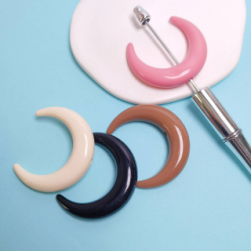
Inspect the features that distinguish the design: a star's facets, a pendant's loop position, a crescent's opening or a quilted bead's relief. For hardware compatibility, use the intended connector or rod. Agree the relevant inspection method and acceptance criteria with the supplier; a generic photograph cannot establish mechanical performance.
Ask the quotation to separate component costs, tooling or development charges where applicable, samples, packing and freight. Confirm who controls any custom tooling and design files, and the terms for later reorders. Do not assume exclusivity or ownership from the word OEM.
Prepare the brief for your destination market
For buyers serving North America, Europe, Australia or South America, specify the actual destination country rather than only a region. Include the intended sales channel, customer age group where relevant, required label language, and any buyer-required documentation or testing scope. Requirements must be reviewed for the particular product and application; a material name alone is not a compliance claim.
For a brand selling in several countries, list the required package-language versions and SKU mapping separately. A Spanish-language pack, a Portuguese-language pack and an English-language pack should not silently become the same artwork file. Confirm these as project requirements, not as assumed standard services.
Agree the delivery term and named destination, what the freight quotation includes, and which party will arrange any remaining steps. No universal shipping time or landed cost is implied by a sample request.
Start from a product you can identify
Browse resin beads, acrylic beads or charms and pendants, then use an exact SKU in your brief. The QULA OEM/ODM overview explains the inquiry-to-approval process. For pen projects, also review our material and assembly-fit guide.
Buyer Questions
Does a one-bag stock MOQ apply to a custom design?
No. Stock MOQ belongs to the particular catalog item. A custom design, new color or branded pack needs a separate feasibility review and quotation.
Can a photo be the only specification?
A photo can establish the visual reference, but it does not reliably provide hidden geometry, measurements, material formulation or attachment clearance. Identify those separately and confirm on a sample.
Can I use a licensed character or another brand's logo?
Provide the relevant authorization for any artwork or branding included in the project brief. Do not ask for a protected design to be copied or altered to bypass authorization.
The product examples link to current QULA listings. This is a sourcing checklist, not a claim that a specific custom process, test result or tooling arrangement has already been approved.
Send your custom-project brief
Send your SKU or reference, quantity, destination and the requirements that matter to your project. Samples, availability, custom MOQ and timing are confirmed with the quotation.
Related Buying Guides
For a documented example of packaging an approved custom accessory order, see the custom resin earring packing case study. It describes that project, not a standard specification for every order.
Back to all buying guides