Gold vs Silver Logos on Jewelry Polishing Cloths: A B2B Buying Guide
Choose a metallic logo appearance around contrast, artwork and the complete private-label specification, not color preference alone.
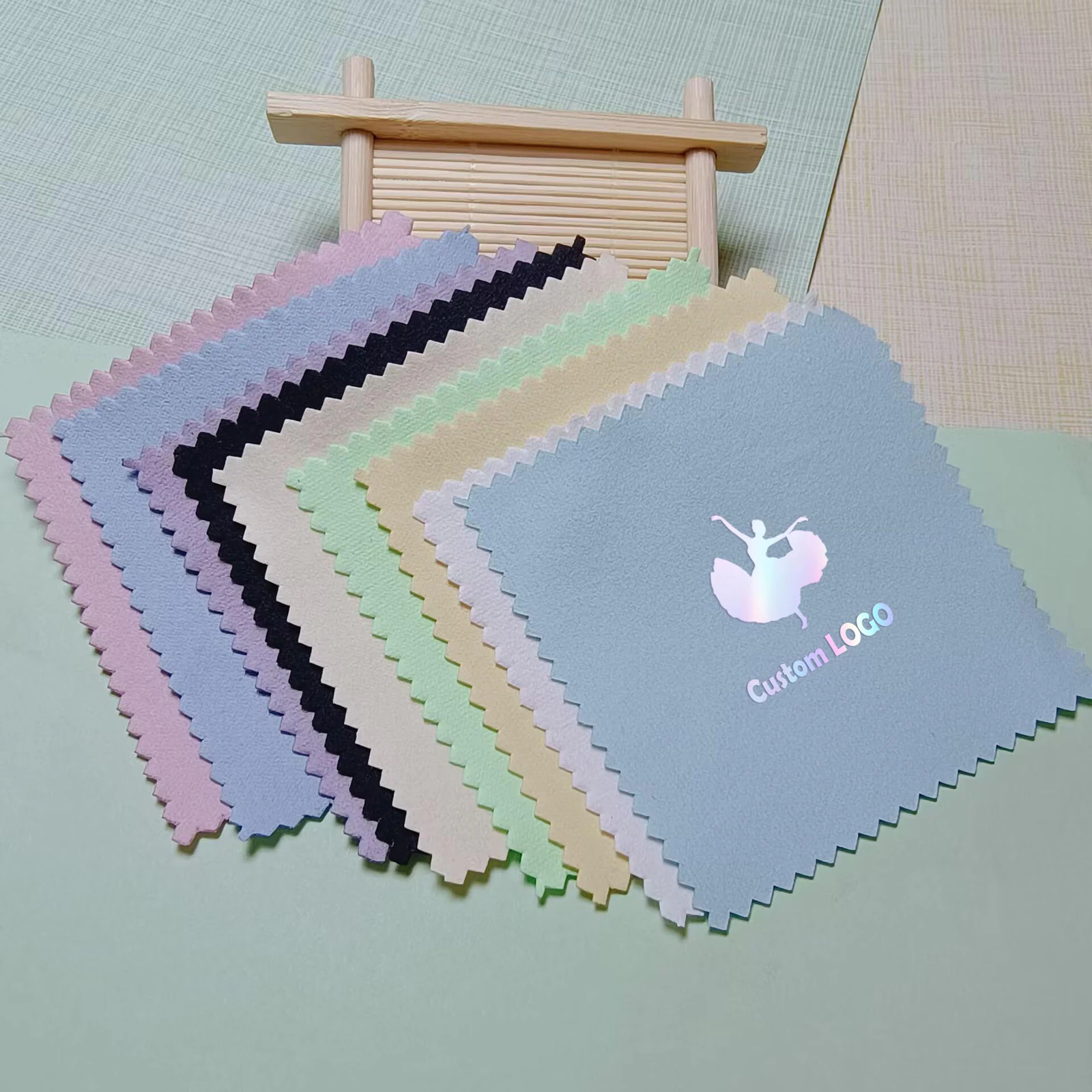
The short answer: choose a gold logo when its warmer appearance and contrast suit the cloth and packaging; choose silver when a cooler metallic appearance fits the brand palette. Neither option is automatically more premium or more visible. Review the logo at its real finished size on the exact cloth color, then approve a physical sample before bulk production.
This guide is for jewelry brands, wholesalers, retailers and private-label buyers comparing metallic gold and silver logo appearances on custom polishing cloths. It focuses on the purchasing decisions that belong in an OEM/ODM brief. It does not assume a particular cloth material, polishing treatment or logo application method.
Gold or silver: compare the buying decision
| Decision | Metallic gold appearance | Metallic silver appearance |
|---|---|---|
| Visual direction | Often reads warmer alongside cream, black and warm-tone packaging. | Often reads cooler alongside blue, gray, black and cool-tone packaging. |
| Contrast | Can stand out on dark cloths; visibility on pale or yellow cloths needs a sample check. | Can stand out on dark cloths; visibility on white, gray or very pale cloths needs a sample check. |
| Artwork review | Fine lines, small text, open areas and placement must be assessed at the intended finished size. | |
| Packaging match | Compare the cloth and logo beside the actual pouch, sleeve or box artwork instead of approving each component separately. | |
| Production approval | Confirm the application method, color appearance, sample, quantity per version and acceptance standard in writing. | |
These are design tendencies, not fixed rules. Metallic surfaces can look different under daylight, retail lighting and photography. A strong decision comes from comparing physical samples under the conditions in which customers will see the product.
Start with contrast, not a claim of luxury
A metallic logo must remain recognizable at the intended size. Place the artwork over a photo or sample of the chosen cloth and judge the outer shape, small gaps and text first. A gold mark may lose definition on a similar warm or pale background; a silver mark may appear quiet on a very light or cool gray cloth. Reflective highlights can also change with viewing angle.
Ask for a digital placement mockup to review scale and position, but do not use it as proof of the finished metallic appearance. A physical sample is still needed to evaluate contrast, edge definition and how the mark looks when the cloth is folded or packed.
Define the appearance without guessing the process
Use wording such as “metallic gold logo appearance” or “metallic silver logo appearance” in the first inquiry. Do not specify foil, ink, transfer or another process unless the factory has confirmed that method for the selected artwork and cloth. The application method can affect feasible detail, feel, appearance and approval criteria.
Send the logo as an owned or licensed vector file when possible. Include the intended logo width, placement, cloth dimensions and a reference showing the expected gold or silver direction. Ask the supplier to identify any lines, gaps or lettering that may need adjustment instead of simplifying the artwork without approval.
Coordinate the cloth with the packaging
A polishing cloth is often presented inside a printed sleeve, jewelry pouch, care kit or retail box. Review the visible cloth color, metallic logo and packaging palette as one system. Record the approved artwork version for every component so a gold cloth logo is not accidentally paired with an outdated silver packaging file.
For a product family, decide whether every item uses one metallic appearance or whether gold and silver versions represent different collections. If you plan both versions, request the minimum quantity and price for each artwork-and-color combination. A total order quantity does not automatically mean it can be divided freely among logo finishes, cloth colors or packages.
Approve an exact sample before the wholesale order
- Cloth: confirm the construction, color, finished dimensions, edge style, polishing treatment and intended surface.
- Logo: confirm the metallic appearance, application method, finished size, placement and orientation.
- Artwork: approve one named file version and keep a record of any production adjustments.
- Packaging: check how the cloth is folded, which part of the logo remains visible and whether the package protects the finished mark.
- Inspection: agree on the visual reference and any product-specific test or acceptance criteria that will be used for the bulk order.
The photographs on a product page can demonstrate colors, shapes and logo examples, but they do not prove universal compatibility with silver, gold, plated jewelry, pearls, gemstones or coated surfaces. Confirm the exact care use and instructions for the ordered cloth.
Prepare one RFQ that suppliers can quote accurately
| Product use | Intended jewelry or metal surface and the care program in which the cloth will be supplied |
|---|---|
| Cloth specification | Preferred color, open dimensions, shape, edge style and any required construction or treatment |
| Logo | Gold or silver appearance, vector artwork, intended width, placement and orientation |
| Variants | Quantity required for each cloth color, logo appearance, artwork and packaging version |
| Packaging | Individual sleeve, pouch, box or care-kit requirements, including how the cloth should be folded |
| Approval | Digital mockup, physical sample requirements and the reference used for bulk inspection |
| Delivery | Destination country, city or postal code and the requested arrival window |
Buyers in North America, Europe, Australia and South America should identify the actual destination rather than naming only a region. If packaging needs Spanish, Portuguese, French, German or another language, provide buyer-approved copy and identify the quantity for each version. Do not assume one language or labeling requirement applies across an entire continent.
A simple decision sequence
- Select the cloth specification for its intended care use.
- Shortlist cloth colors that fit the brand and packaging.
- Compare gold and silver logo mockups at the true finished size.
- Ask the factory to confirm the feasible application method and artwork detail.
- Approve a physical sample of the exact cloth, logo and packaging combination.
- Record quantities and artwork files per variant before production.
Review the visible examples on our custom metallic gold and silver logo polishing cloths page. For a different branding direction, compare printed and embossed polishing-cloth logos and coordinate the finished item with your private-label jewelry-care packaging.
Buyer questions
Which logo color is easier to see on a black polishing cloth?
Both gold and silver can create visible contrast on black, but the result depends on the artwork, application method, viewing angle and sample. Compare both appearances at the actual logo size before selecting one.
Can one wholesale order include both gold and silver logo versions?
Ask for the minimum quantity and price per version. The feasible split depends on the approved cloth, logo process, artwork, packaging and production arrangement; do not assume the total order can be divided freely.
Does a metallic logo determine how the polishing cloth performs?
No. The visible logo does not establish the cloth construction, polishing treatment or surface compatibility. Confirm the product specification and intended care use separately.
What files should a brand send for sampling?
Send an owned or licensed vector logo, the intended finished size and placement, a gold or silver appearance reference, the cloth color and dimensions, packaging brief, estimated quantity and delivery destination.
Request a metallic gold or silver logo polishing-cloth quotation with your artwork, cloth requirements, quantity per version and destination.