Printed vs Embossed Logos on Custom Polishing Cloths
Decide between a visible printed mark and a tonal embossed finish, then approve the logo at its real size.
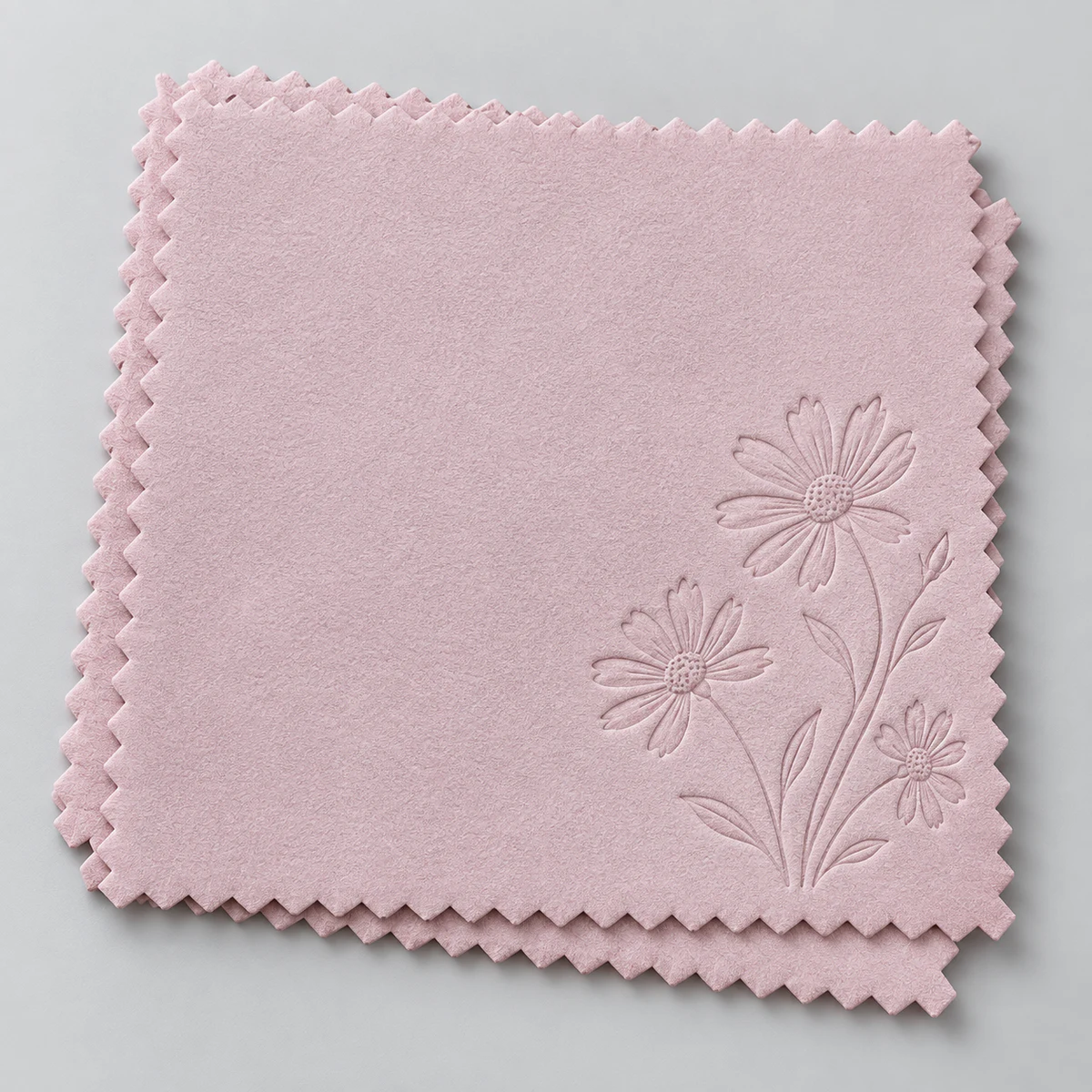
The short answer: consider printing when visible color contrast is a priority, and embossing when you want a more understated, tonal mark. Neither is automatically better for every cloth. Base the decision on a sample of the actual fabric, the logo's finished dimensions and the way the customer will receive it.
For jewelry brands, a care cloth is a small but frequently handled branded item. Fine typography that looks elegant on a large screen may lose clarity on a folded cloth. Choosing the logo method early also helps the packaging designer decide how much branding needs to sit on the outer sleeve.
What each option is trying to achieve
A printed logo adds a visible graphic to the surface. The available printing process, colors and level of detail must be confirmed for the selected cloth and any treatment. Do not assume that every fabric supports a photographic design, a metallic ink or an exact color match.
An embossed logo creates a textured impression rather than relying on a contrasting printed color. Its visibility can change with fabric texture and the angle of light. Ask the supplier to identify the specific process and show how your artwork will appear on the proposed material.
| Printed logo | Embossed logo |
|---|---|
| Useful when the logo should be easy to identify through color contrast. | Useful when a subtle, tactile brand mark suits the presentation. |
| Review ink color, small lettering and how the design sits on the cloth color. | Review impression clarity, small details and visibility under normal light. |
| Confirm the printing method and color reference in the quotation. | Confirm the embossing method and any setup or tooling in the quotation. |
Prepare artwork at the size people will see
Supply the original vector file when available, with the intended logo width and height in millimeters. Identify any minimum-size rules in your brand guidelines. Include a simple version of the mark for comparison if the full logo has fine outlines, small text or closely spaced elements.
There is no universal minimum line width that applies to every cloth and process. Request a supplier review of your actual file. A screenshot or a low-resolution logo lifted from a website may be useful as a reference, but it should not be treated as the final production artwork.
Approve the open and folded positions
Show the unfolded cloth, the fold lines and the final visible panel in the artwork proof. State the distance from the relevant edge and any seam or zigzag cut. A centered logo can disappear inside a fold, while a corner logo can be hidden by a small sleeve.
If you plan to photograph the cloth in a jewelry box, review that complete arrangement. The cloth, packaging and brand card should have a clear visual hierarchy; they do not all need the largest possible logo. See the cloth and packaging approval checklist for the items to sign off together.
Compare like-for-like quotations
Use the same cloth specification, dimensions, quantity, artwork size, packaging and destination when comparing branding options. Ask the quotation to separate sampling, setup or tooling, unit pricing and packing. Also confirm whether repeat orders reuse existing setup or require a new approval.
Do not assume embossing is always more expensive, printing is always cheaper, or either method always lasts longer. Those conclusions require the actual construction, artwork and quote. Any performance claim should be supported by an agreed evaluation, not inferred from the method's name.
Sample review before a brand launch
- Inspect the mark at normal reading distance, not only in a magnified photograph.
- Check spelling, symbol details, logo dimensions and position against the approved artwork.
- Examine the folded product inside the agreed sleeve, pouch or box.
- Agree relevant handling or transfer checks for the intended product before approval.
- Record the sample reference, approval date and artwork version for the production order.
Qula offers custom printed silver polishing cloths and custom embossed silver polishing cloths. Final feasibility, quantity requirements and timing are confirmed against your specification.
Buyer questions
Which option is better for a small, detailed logo?
There is no reliable answer without the artwork and cloth specification. Submit the logo at its intended finished size and ask for a feasibility review and a physical sample before committing to the branding method.
Does a digital logo mockup replace a physical sample?
No. A digital mockup helps approve size and placement, but it does not establish the exact color, impression depth, fabric feel or performance of the finished product.
Send your logo for a printing or embossing quotation. Include the cloth size, quantity per design, packaging choice and delivery destination.