Silver Polishing Cloth vs Microfiber Lens Cloth: What Should Your Brand Order?
Two similar-looking cloths can have different purposes. Match the specification and care label to the surface.
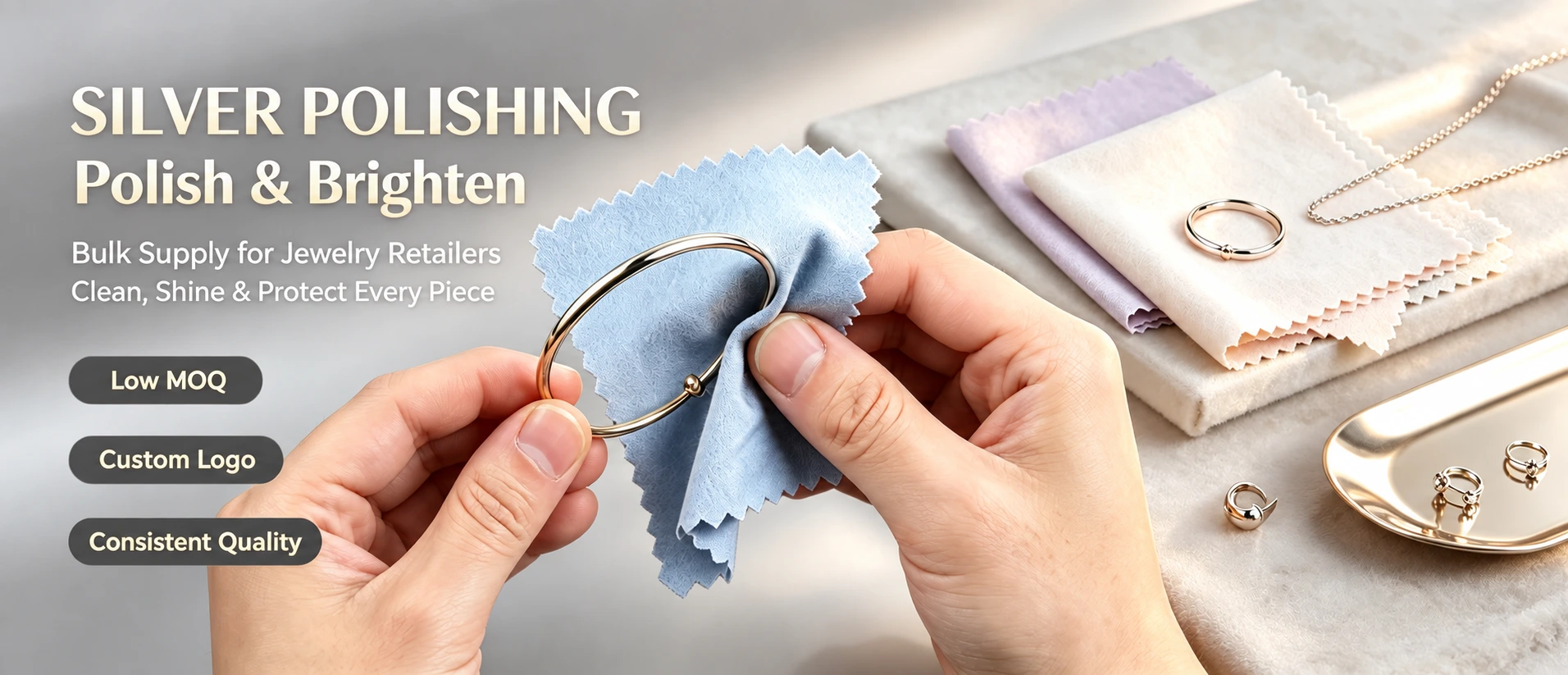
The short answer: a silver polishing cloth and a microfiber lens cloth are not interchangeable merely because both feel soft. A polishing cloth may contain a treatment intended for particular metals. A lens cloth is selected for optical cleaning. Confirm the exact cloth, surface compatibility and care instructions before branding either product.
This distinction matters when a retailer sells both jewelry and eyewear, or when a wholesaler adds a small cloth to several product lines. One shared logo is possible as a design choice; one shared technical specification should not be assumed.
Start with the job, not the fabric name
For silver jewelry, buyers may be looking for help with tarnish removal and polishing. For coated eyeglass lenses, buyers generally want to remove fingerprints and everyday surface dirt using a product suitable for those lenses. "Microfiber" identifies a type of textile construction, not a universal compatibility guarantee or proof of a chemical treatment.
Brand-specific care guidance illustrates the difference. Hagerty's Silver Cloth instructions describe an impregnated cloth for silver and silver-plated jewelry that should not be washed. ZEISS's lens-cleaning guidance describes microfiber cloths for lenses and provides its own cleaning instructions. These examples explain why the product instructions matter; they are not specifications, endorsements or test results for Qula cloths.
A comparison for your purchasing brief
| Silver polishing cloth | Microfiber lens cloth |
|---|---|
| Identify the metal, plating, finish and any nearby stones. | Identify the lens or screen, its coating and the device maker's care guidance. |
| Ask whether the cloth is treated and what uses are excluded. | Ask for the exact textile specification and intended optical applications. |
| Confirm whether washing is prohibited for that cloth. | Confirm the recommended cleaning, storage and replacement instructions. |
| Approve jewelry-specific care wording for the agreed product. | Approve lens-specific wording; do not copy a jewelry-polishing label. |
Define the surface precisely
"Jewelry" is too broad for a compatibility instruction. List whether the item is sterling silver, silver-plated or another finish, and disclose decorative patina, coatings or stones. Ask the supplier what the proposed cloth is intended for and what should be avoided. Do not infer suitability for every item in a collection from a successful test on one plain metal sample.
For eyewear, state whether the accessory is supplied by an optical retailer, included with a specific lens range, or sold for general screen care. Follow the relevant lens or device manufacturer's instructions. Keep test samples clean, and agree an appropriate evaluation procedure before making a scratch-resistance or coating-safety claim.
Keep two specifications even when branding matches
Create separate SKU records for jewelry care and optical care. Each should identify the approved material or treatment, unfolded and folded dimensions, edge finish, logo artwork, packing method and care text. An attractive shared packaging design can still clearly label the intended use.
For example, a brand could request a jewelry-care cloth in a printed sleeve and a lens cloth in an eyewear pouch. Ask for each item to be quoted and sampled separately. Do not assume the same printing process, washing instructions, price or minimum quantity will apply to both.
What to review in a pre-production sample
- Match the sample reference to the exact material and any treatment stated in the quotation.
- Review the intended-use wording and exclusions before approving the packaging artwork.
- Check the logo at actual size on the open cloth and in its final folded position.
- Evaluate the cloth against your specified use using an agreed procedure, with any necessary qualified testing arranged separately.
- Keep the approved sample and final artwork version for comparison with the shipment.
Whether your destination is North America, Europe, Australia or South America, send the required label language and destination with your RFQ. A translated label still needs the correct product-specific instructions; changing the language cannot fix an incorrect intended-use claim.
Buyer questions
Can a treated silver polishing cloth clean eyeglasses?
Do not use a silver-treatment cloth on eyeglass lenses unless the exact product is explicitly confirmed for that use and consistent with the lens maker's guidance. Similar appearance is not evidence of compatibility.
Can every polishing cloth be washed?
No. Washing may remove the treatment from some polishing cloths. Obtain the care instructions for the exact product; instructions for a washable lens cloth should not be transferred to a treated jewelry cloth.
Explore custom silver polishing cloths and microfiber eyeglass and screen cleaning cloths, then request separate specifications for your product lines.