How to Evaluate a Jewelry Polishing Cloth Wholesale Supplier
Use one evidence-based checklist to compare polishing-cloth suppliers, samples and landed quotations.
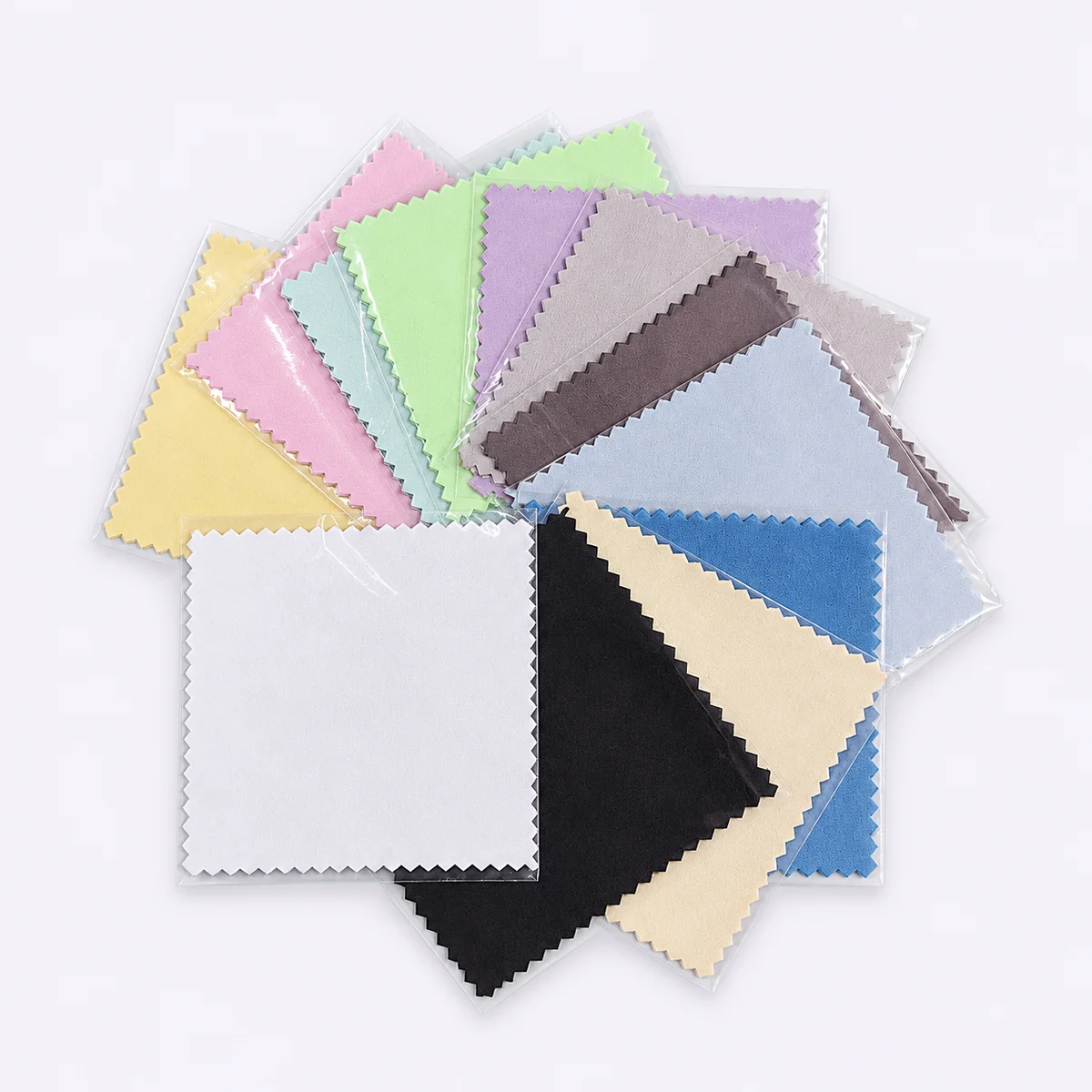
The short answer: a suitable jewelry polishing cloth wholesale supplier should be able to turn your intended use into a written specification, supply a representative sample, explain customization limits, quote each variant clearly and define how the bulk order will be checked. Unit price alone cannot show whether two quotations describe the same product.
This checklist is designed for jewelry brands, care-product distributors, packaging companies and promotional-product buyers sourcing for the United States, Canada, Europe, Australia and South America. It helps you compare like with like without assuming that every manufacturer uses the same material, treatment, minimum quantity or lead time.
1. Begin with a product specification, not a catalog photo
State the intended metal or surface, whether a treated or untreated cloth is required, the open dimensions, shape, edge finish, color, logo method and individual packaging. Ask the supplier to confirm each point in writing and identify anything that remains subject to sampling.
If the supplier proposes an alternative, request a revised specification instead of accepting "similar quality." Small changes can affect appearance, instructions, packing count and customer expectations. Our first-order polishing cloth checklist can help you prepare the initial brief.
2. Verify that the sample represents the order
Clarify whether the sample is made with the production material, treatment, color, logo and packaging. A generic stock sample can show workmanship, but it cannot approve every custom detail. Record which decisions the sample covers and what will be confirmed later through a pre-production sample or artwork proof.
- Label the sample with a reference number and date.
- Measure the cloth and logo instead of judging only from a photograph.
- Review the cloth folded inside its final sleeve, pouch or box.
- Check instructions and exclusions against the intended use.
- Keep an approved reference for shipment inspection and repeat orders.
3. Compare the total customization scope
| Field | What the quotation should state |
|---|---|
| Cloth | Construction or treatment, dimensions, color, shape, edge and intended use |
| Branding | Method, logo dimensions, colors, placement, artwork format and setup |
| Variants | MOQ and unit price for each size, color, logo or package combination |
| Packaging | Individual pack, insert, carton quantity, barcode or label requirements |
| Sampling | Sample type, charge, timing, shipping and what the approval covers |
| Production | Lead time trigger, inspection point and repeat-order reference |
| Delivery | Currency, trade or delivery basis, destination and included services |
Ask whether the stated minimum applies to the total order or to every variant. A 5,000-piece project divided among five cloth colors and two packaging languages can require a different production plan from one 5,000-piece SKU. Do not publish a supplier's MOQ or lead time on your retail site until it is confirmed for the actual configuration.
4. Review logo capability with real artwork
Send an owned or licensed vector file, the intended finished size and the cloth color. Ask the supplier to flag thin lines, small lettering, gradients and close spacing before sampling. A digital mockup is useful for position and scale, but it does not establish the final color, impression, hand feel or durability.
Compare printed and embossed logo options using the same cloth and package wherever possible. If metallic gold or silver branding is required, approve the actual appearance under normal light rather than relying only on a screen color.
5. Ask how quality will be controlled
A supplier evaluation should define what can be checked consistently. Typical points include dimensions, color reference, edge finish, logo size and position, package artwork, packing quantity and visible defects. Product-specific performance checks need an agreed method and acceptance criterion; a vague promise of "high quality" is not an inspection plan.
Before production, agree who approves the sample, how changes are recorded and what happens if a material or process must change. For repeat orders, cite the approved sample and specification version. This reduces the risk of purchasing teams and factories working from different email attachments.
6. Calculate landed cost and delivery risk
Compare quotations using the same destination, currency, shipping arrangement and included services. State the city and postal code as well as the country. Separate production time from sample approval, artwork revision, transport, import clearance and local delivery. A target arrival date is more useful than asking only for the fastest factory lead time.
For European or South American programs with several packaging languages, list quantity by language. For Australia and North America, include retailer labels, carton marks or routing requirements in the RFQ. The buyer remains responsible for confirming destination-specific taxes, customs, product claims and legal requirements with qualified parties.
Red flags when comparing suppliers
- The quotation says only "polishing cloth" without intended surface or treatment status.
- The supplier confirms every surface or claim without asking about the product use.
- MOQ, price and lead time are given without separating variants.
- The production order can change materials without a new approval.
- Care instructions are copied from a different product or left until after packaging is printed.
- The lowest price excludes packaging, setup, inspection or delivery items included elsewhere.
Buyer questions
What should I send for a wholesale polishing-cloth quote?
Send intended use, cloth dimensions and color, treatment requirement, logo artwork and size, packaging, quantity per variant, destination city and postal code, target arrival date and sample expectations.
How do I compare two jewelry polishing cloth manufacturers?
Give both suppliers the same written brief, then compare the confirmed specification, representative sample, variant MOQ, quality plan, packaging scope, delivery basis and total landed assumptions.
Should I choose the lowest unit price?
Only after confirming that the quotations cover the same cloth, treatment, logo, packaging, quantity split, quality checks and delivery scope. A lower unit figure can describe a different product or exclude required work.
Can Qula support private-label repeat orders?
Qula can review private-label specifications, artwork, packaging and repeat-order references. Availability, MOQ, sample process, timing and pricing are confirmed for the specific project.
Review Qula's OEM/ODM workflow and custom jewelry polishing cloth options, then send one complete wholesale RFQ for a comparable quotation.