Treated vs Untreated Jewelry Polishing Cloths: A B2B Sourcing Guide
Choose the cloth by intended surface, treatment and care instructions before approving your private-label order.
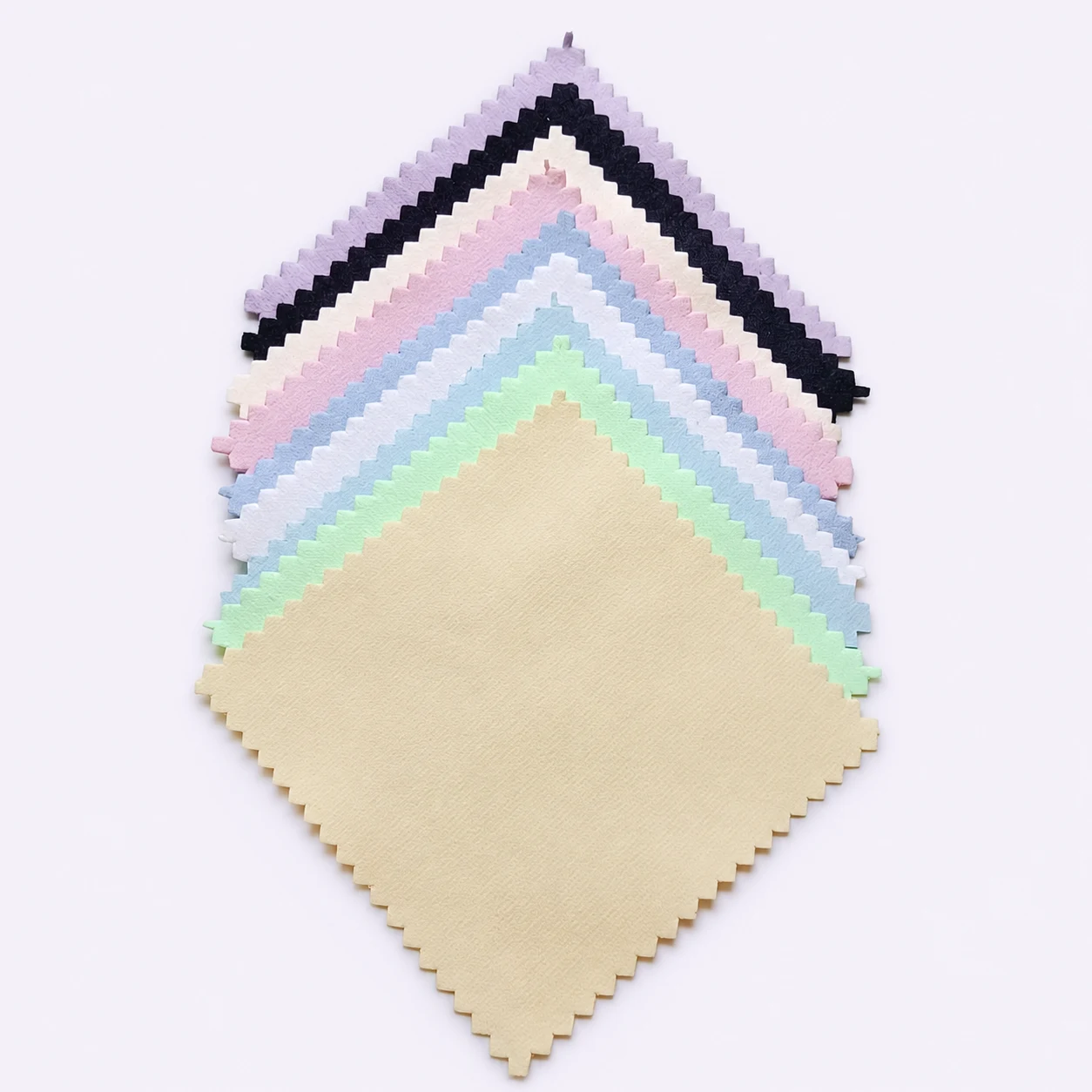
The short answer: choose a treated jewelry polishing cloth when the confirmed treatment and intended metal match your care program. Choose an untreated cloth when you need a clean, non-impregnated wiping or presentation cloth for a separately defined use. Do not decide by color, softness or the word "microfiber" alone.
For a jewelry brand or wholesaler, this is more than a material choice. Treatment affects the claims that can appear on the packaging, the surfaces that should be excluded, the care instructions, the sample evaluation and sometimes the way the cloth is stored. The supplier should identify the proposed construction and intended use before your logo is approved.
What is a treated jewelry polishing cloth?
A treated cloth contains or carries a polishing or cleaning treatment intended for a defined application. The treatment is not visible in every product and it is not proven by a particular cloth color. Its suitability depends on the exact formula, cloth construction, metal, plating, finish, stones and coatings involved.
Ask the supplier to state what the proposed cloth is designed to polish and what it should not contact. "For jewelry" is too broad for a private-label care instruction. A plain sterling-silver test piece does not establish compatibility with oxidized finishes, plated items, pearls, porous stones or every item in a mixed collection.
What is an untreated polishing or wiping cloth?
An untreated cloth has no polishing treatment added for the quoted specification. It may be selected for wiping, handling, presentation, applying a separately approved product or another clearly defined task. Untreated does not automatically mean suitable for every delicate surface, and it does not prove scratch-free performance.
For buyers who sell both jewelry and eyewear, keep the specifications separate. A microfiber lens cloth and a jewelry polishing cloth can look similar while serving different jobs. Read our silver polishing cloth versus lens cloth guide before combining either product in one care range.
Treated vs untreated: procurement comparison
| Decision point | Treated cloth | Untreated cloth |
|---|---|---|
| Primary job | Polishing or cleaning a confirmed metal or finish | Wiping, handling, presentation or another defined non-treated use |
| Compatibility brief | List metal, plating, finish, stones and exclusions | List the exact surface and expected wiping task |
| Care wording | Use the instructions for that treatment; washing may be prohibited | Confirm product-specific washing, storage and replacement guidance |
| Packaging | Protect the cloth and preserve the approved instructions | Prevent contamination and keep the intended use clear |
| Evidence | Review the treatment specification and agreed evaluation | Review construction, cleanliness and agreed evaluation |
Five questions your supplier should answer
- What is the exact intended surface? Name the metal or material and any important exclusions.
- Is the cloth treated? Put the answer in the quotation and product specification rather than relying on an image or verbal description.
- What care instructions apply? Confirm whether washing changes performance and how the cloth should be stored.
- Which branding methods are feasible? The logo method must be evaluated on the approved cloth, not on a generic fabric swatch.
- What does the sample approval cover? Record the sample reference, artwork, package, instructions and any agreed acceptance criteria.
How treatment affects private-label packaging
Packaging should tell the buyer what the cloth is for, how to use it and what to avoid. Do not copy instructions from another supplier or a different SKU. If the cloth should not be washed, that instruction needs to remain visible throughout the product's sale and use. If one side or layer has a different function, the package should explain the sequence clearly.
For multilingual shipments to Europe or South America, provide buyer-approved translations for each market. Australia and North American orders may also have retailer-specific labeling or packaging rules. Qula can manufacture to an approved brief, but the brand owner should confirm market-specific claims and compliance requirements with qualified advisers.
Sample and quality-control plan
- Receive a sample made from the proposed cloth and treatment, not a color-only substitute.
- Check finished dimensions, edge cut, cloth color, feel, logo size and package fit.
- Evaluate the intended use on representative items under an agreed procedure.
- Review all warnings, exclusions and care instructions before artwork approval.
- Keep the approved sample and versioned specification for bulk inspection and repeat orders.
Do not promise scratch removal, universal jewelry compatibility or unlimited reuse unless the exact product has suitable evidence. Marketing claims should stay narrower than the approved specification, not broader.
Buyer questions
Can a treated jewelry polishing cloth be washed?
Do not assume so. Washing can reduce or remove the treatment in some products. Follow the care instruction for the exact approved cloth and state it on the private-label packaging.
Does black residue mean the cloth has stopped working?
Appearance alone is not a reliable end-of-life rule. Ask for the product-specific replacement and care guidance, and avoid making performance claims from color change without supporting information.
Can one cloth be used on silver, gold, plated jewelry and gemstones?
Only if the exact product is confirmed for each intended surface. List every material in the buyer brief and keep exclusions visible. One successful test does not establish universal compatibility.
Can Qula add a logo and individual packaging?
Custom logo and packaging options can be reviewed against the selected cloth, artwork, quantity and intended market. Send the full specification for feasibility, sampling and quotation.
Start with Qula's custom silver and jewelry polishing cloth range, then request a treated or untreated cloth quotation with your intended surface, dimensions, logo, packaging, quantity and destination.